Ember
EmberScore your buck from a photo.
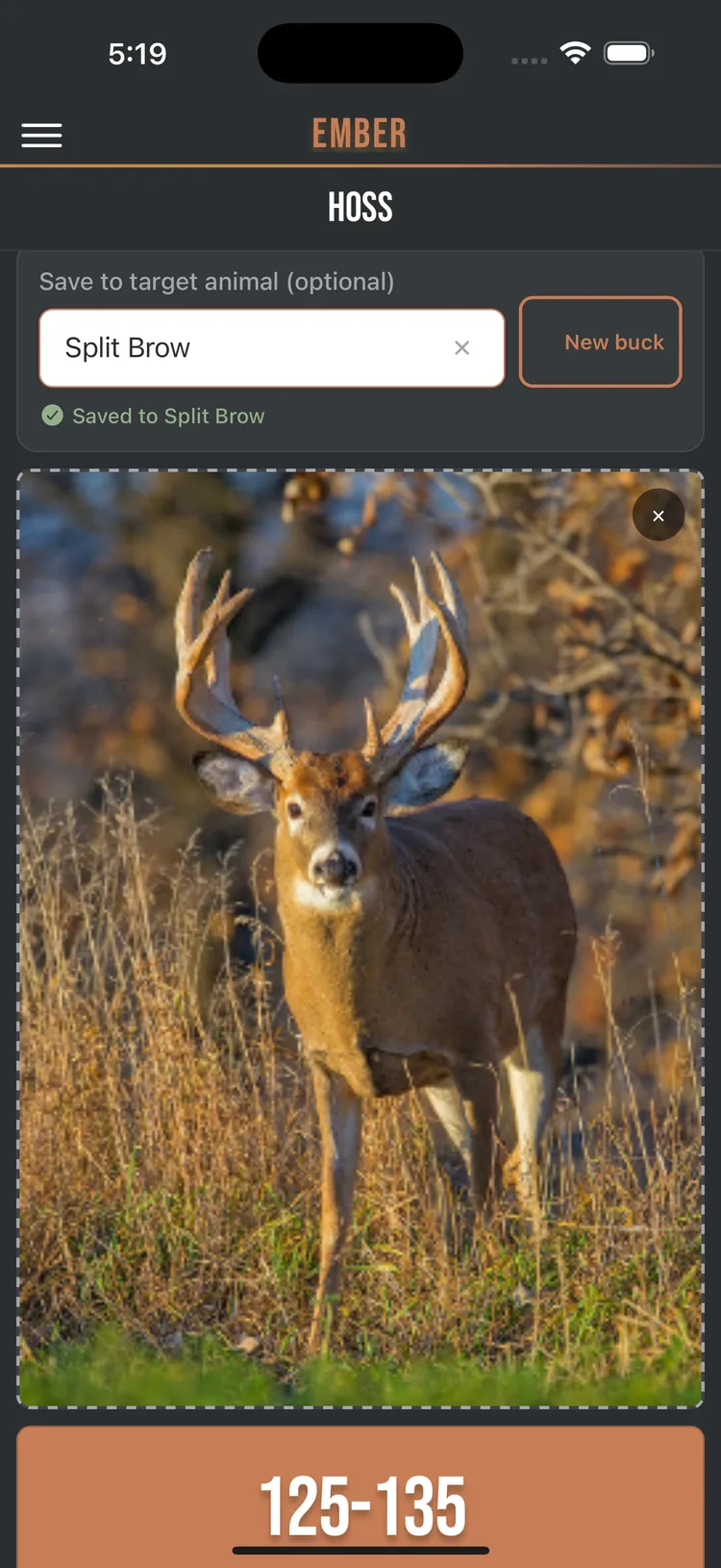
Snap a pic and HOSS G1 — your buddy in the app who knows his way around a rack — gives you a fast field estimate to settle the camp debate. It’s an educated guess from a photo, not an official score.
buddy” — HOSS G1
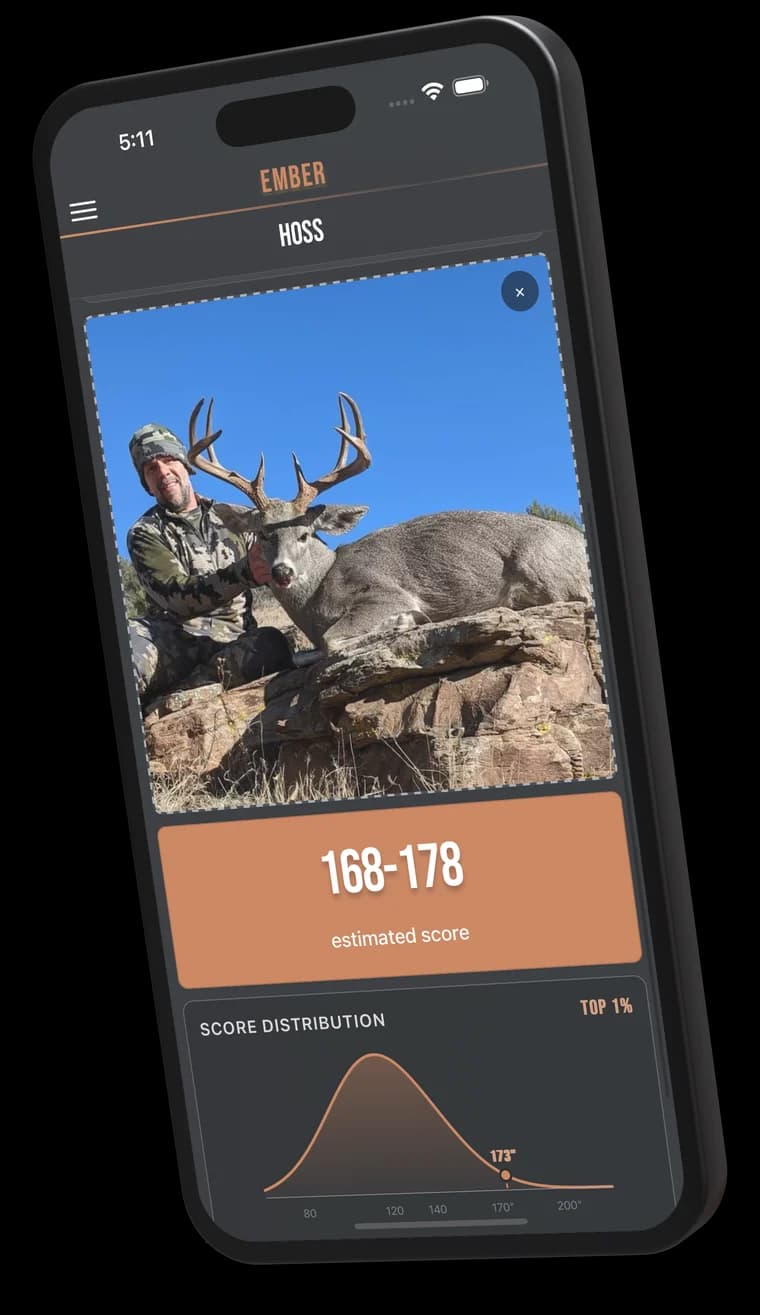

Four taps to a ballpark.
HOSS G1 does the eyeballing so you can settle the bet at camp. Here’s exactly what happens between your photo and his guess.
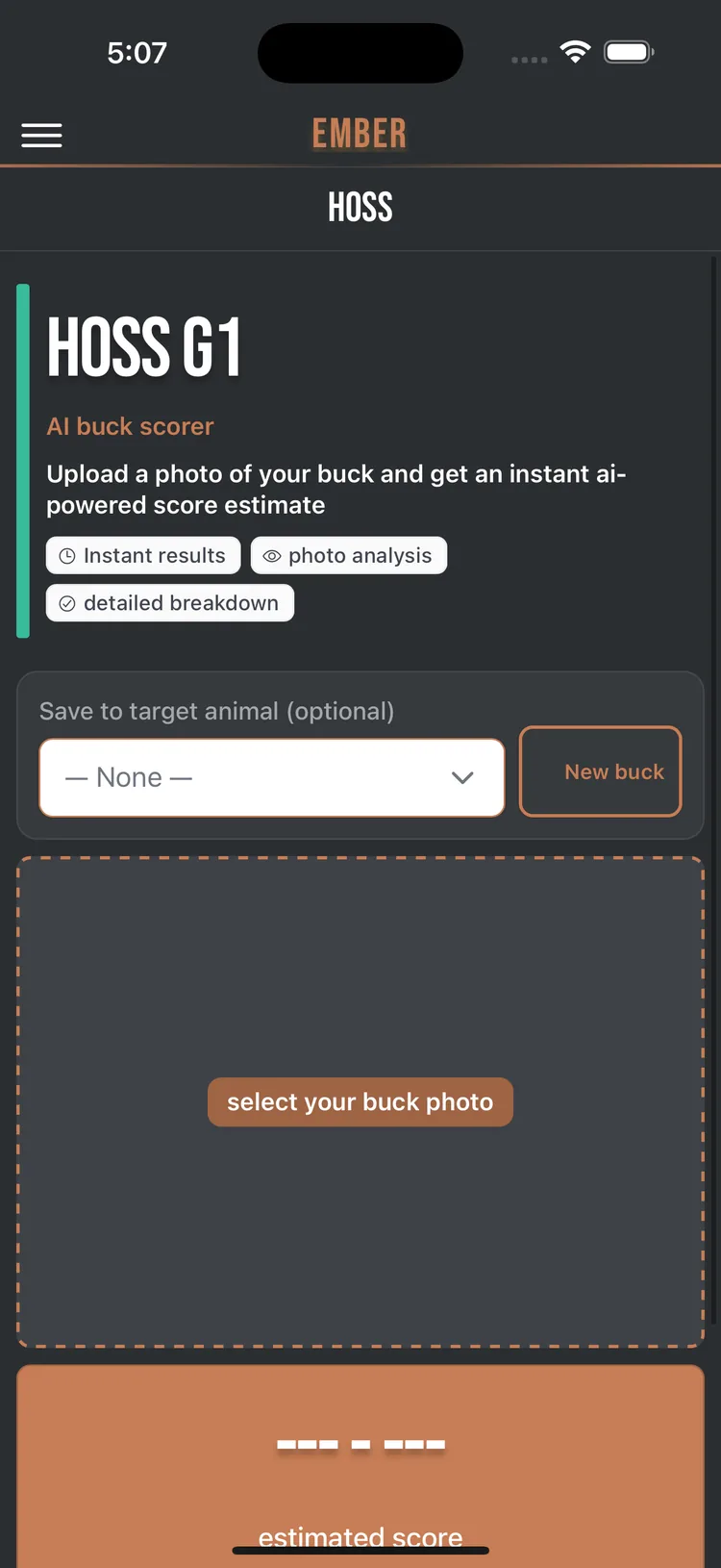
Snap or upload a photo
A clean side-on shot of the rack gives HOSS the most to work with. The better the photo, the better his read — a bad angle or a far-off deer, and he says so.
HOSS reads the antlers
He picks out points, spread and mass from the pixels and runs the kind of math a scorer runs with a tape — then shows you what he saw, not just a number to trust blindly.
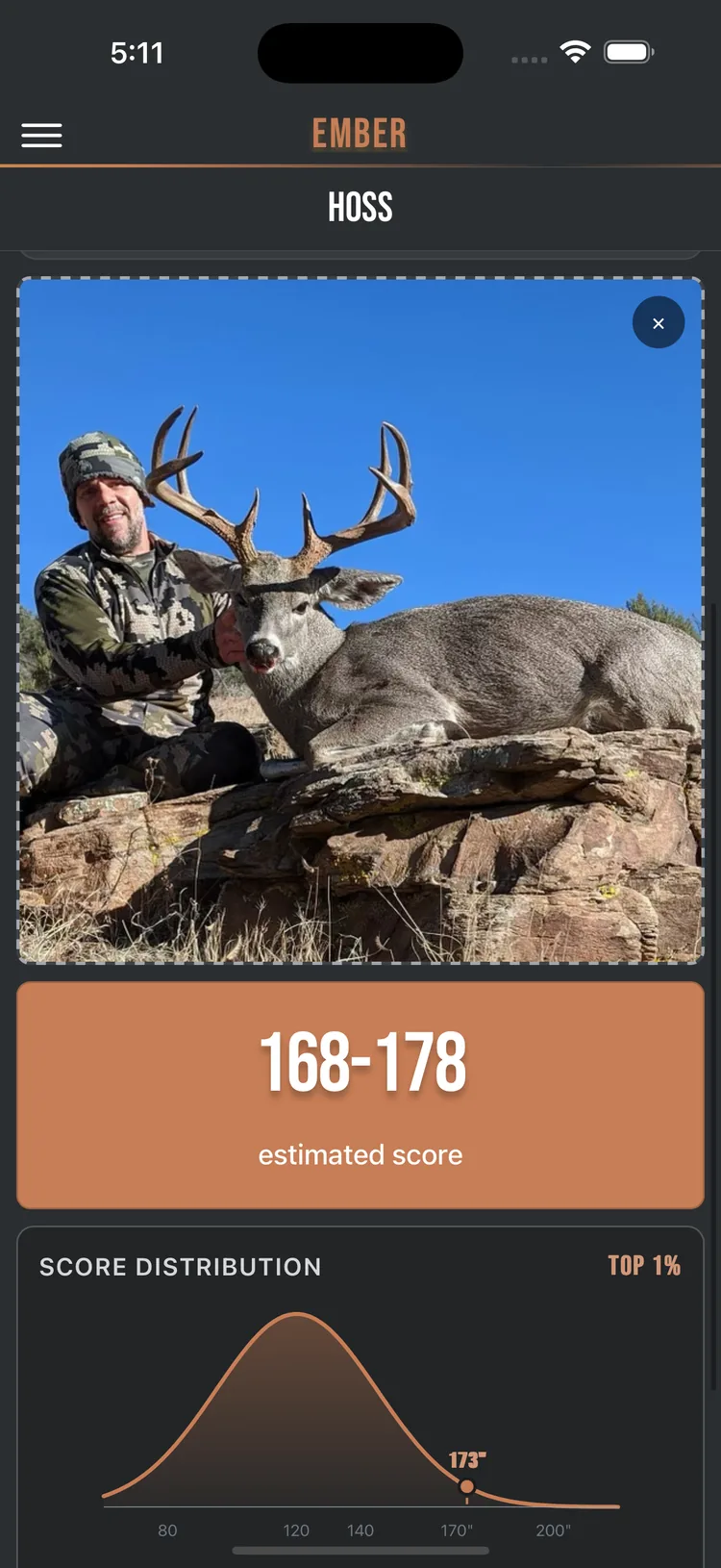
You get an estimated range
Not one magic figure — a range, on purpose. A photo can only tell you so much, so HOSS hands you a low-to-high ballpark and is honest about the spread.
Save it to the buck
Keep the estimate next to the stand it came off, right in your journal. Your season on the record — the sightings, the sits, and the bucks you scored along the way.
Why it’s an estimate.
HOSS will always shoot straight with you. Scoring a buck from one photo is genuinely hard, and here’s the plain reason why.
The angle changes everything
A buck quartered toward the camera looks wider and heavier than he is; turned away, he shrinks. Move the camera a foot and the “score” moves with it.
A flat photo has no depth
Spread and mass are 3D measurements. A single image has no reliable depth reference, so how far the beams push out is genuinely hard to size from pixels.
It can’t count what it can’t see
Points tucked behind an ear, kickers on the back of a beam, a tine snapped off in a fight — if the photo doesn’t show it, no app can add it to the total.
Mass is the hardest part
Real scores add up circumferences measured around the beam at four spots. Reading those off a photo is close to guesswork, and mass is a big chunk of the number.
One moment, one guess
Lighting, lens, distance and the deer’s pose all nudge the estimate. Shoot the same buck twice and you’ll get two slightly different reads — that’s the nature of it.
A real score is a process
Official B&C and P&Y entries need a tape, a required 60-day drying period, and a certified measurer. That’s the real thing. A photo can’t stand in for it.


Any app that hands you one exact number off a single photo and calls it your score is rounding up on the truth.
HOSS gives you the fun part — a fast, honest ballpark to settle the camp bet — and tells you flat out that it’s a ballpark. When you want the real number for the record book, that’s a tape, the drying period, and a certified scorer. We’d rather be the buddy who’s honest with you than the one who oversells.
What you get — and what you don’t.
No surprises. HOSS is a great camp buddy, not a certified scorer, and he’d tell you that himself.
What HOSS gives you
- A fast ballpark to settle the bet at camp
- A low-to-high range that’s honest about the spread
- Bragging rights, saved next to the stand it came off
- HOSS’s read in plain English — what he saw, not just a number
What he doesn’t
- A certified Boone & Crockett or Pope & Young score
- A number you could enter in a record book
- A replacement for a tape and the 60-day drying period
- Anything we’d ask you to bet real money on
Go meet HOSS G1.
Score your next buck from a photo, keep the record, and get the whole rest of Ember while you’re at it — free to start, no AI metering.